Repair or replace, the honest version
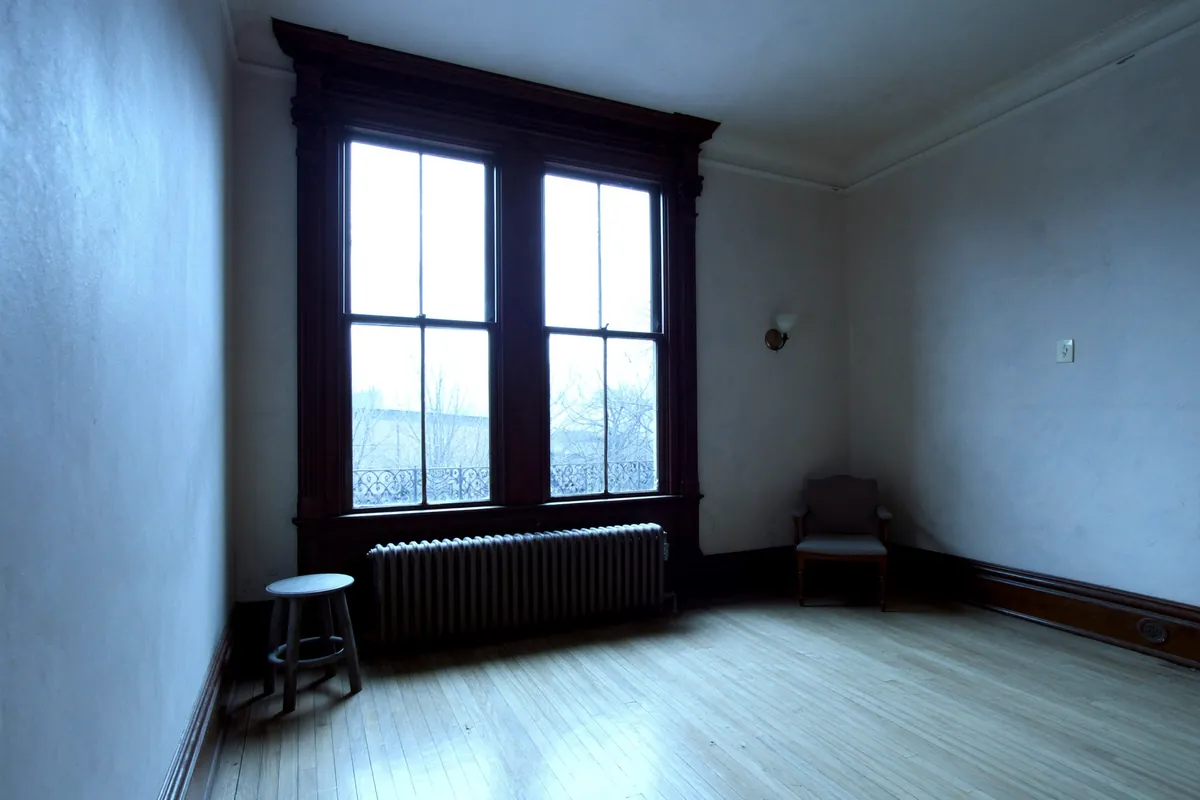
Repair wins more often than the market admits, and Chicago's own adopted guidance says so. The city's Guidelines for Alterations to Historic Buildings, adopted March 4, 1992, open with "The first and best answer to the question of how to treat windows is not to replace them but rather to retain and repair the existing sash and frames." That text governs historic property rather than every house, and it is still the city refusing to treat replacement as the default. Three cases are close to settled: original wood sash sitting in sound frames, one failed sealed unit in an otherwise sound house, and historic art glass, which a replacement quote almost never prices and which the bungalow design guidelines tell owners to keep. Replacement earns its money when the frame itself is gone, when most openings fail at once, or when the opening has to change. No source we read prices a Chicago sash repair, so this page publishes none.
Rules quoted from chicago.gov, read 2026-08-11. This page sits under the cost hub, which collects every figure this site can and cannot attribute. What we refuse to publish, and why, is set out on our methodology page. What we are paid and by whom is on how we make money, and it is worth reading before you take advice from any page that ends in a form, including this one.
The decision, condition by condition
Repair against replace is not one question. It is a different question for each opening, and the thing that decides it is almost always the frame rather than the glass. A sound frame is the asset. Sash, glass, cords, weather stripping and hardware are all serviceable parts sitting inside it.
| What you actually have | Verdict | Why |
|---|---|---|
| Sash sticks, rattles or lets air in. Frame sound and square | Repair | This is a hardware, cord and weather stripping job. The city's 1992 guidance calls weather stripping "nominal" in cost against replacement windows |
| One insulated unit fogged. Everything else fine | Repair or reglaze | A failed seal is a property of that unit. Replacing glass in an existing sash is on the city's no-permit list in any building at any height |
| Historic art glass on the street elevation | Repair and keep | The bungalow design guidelines put "Remove art glass windows" on the list of things not to do, and thin-profile storms on the list of things to do |
| Sill or lower rail rotted, rest of the frame sound | Repair the deteriorated part | The 1992 guidance: "replacing only deteriorated parts an new sill or a sash for instance is preferable to total replacement". Quoted exactly as the city prints it, missing words included |
| Frame rotted through, out of square, water reaching the wall | Replace | The asset the repair case rests on is gone. Expect the price to sit above the standard band, because the opening needs work before a unit goes in |
| Most openings failing at once, similar age and condition | Replace, as one planned job | A pattern, not an incident. One mobilization, one scope, one set of quotes you can actually compare |
| Single-glazed metal frames with no thermal break | Genuinely contested | We read no attributable source measuring this against Chicago's climate, so we rank nothing. Get the frame condition assessed before assuming either answer |
| The opening has to get bigger, smaller or a different shape | Replacement, and a permit question | That is not in-kind, which the city defines as "the same type, size, and shape", so the exemption is gone |
| Condo unit, window in a perimeter wall | Ownership question first | By statutory default the window is a common element assigned to your unit, and your declaration may say otherwise. Settle that before pricing anything |
Rule quotes from the City of Chicago Guide to Building Permits and the Guidelines for Alterations to Historic Buildings and New Construction, adopted March 4, 1992. Bungalow guidance from the Historic Chicago Bungalow Association design guidelines dated June 21, 2012. All read 2026-08-11. The verdict column is our reading of those sources, labeled as ours.
Chicago's own adopted position on this exact question
Almost nobody selling windows will show you this paragraph, and it is the city's adopted text rather than anyone's opinion:
WINDOWS. Windows are frequently the most difficult aspect of any rehabilitation project. The first and best answer to the question of how to treat windows is not to replace them but rather to retain and repair the existing sash and frames. Where this is not possible, replacing only deteriorated parts an new sill or a sash for instance is preferable to total replacement. If total replacement is unavoidable, the replacement windows must match the historic windows in design and operation, material, glass size, muntin arrangements, profiles, and trim such as brick mold and sill.
Guidelines for Alterations to Historic Buildings and New Construction, adopted March 4, 1992. Quoted exactly as the city prints it, including the missing words in the third sentence. Read at chicago.gov 2026-08-11.
Read that as a three-step ladder rather than a slogan. Retain and repair first. If that is not possible, replace the deteriorated parts only. Total replacement is the last rung and it arrives with six things the new window has to match. Most quotes start at the third rung and describe none of the six.
The same document takes on the energy argument used to skip the first two rungs:
Often, window replacement is dictated by concerns for energy conservation, particularly replacing single-glazed sash with double-glazed sash. A wide variety of double-glazed units are available, some designed especially for historic buildings. However, properly weather-stripped, single-glazed sash can greatly reduce or eliminate air infiltration between sash and frame where most energy is lost. The cost of weather stripping is nominal compared to the price of replacement windows, yet the effect can be considerable.
Same document, read at chicago.gov 2026-08-11.
Two honest limits, because we would rather state them than let you over-read the quote. It is written for historic property, not every house in Chicago, and it does not say double glazing is refused anywhere. What it does say is that the city, which has no stake in the sale, expects repair and weather stripping to have been considered before replacement is treated as settled. In a landmark district it is closer to a standard than a suggestion, and the landmark page covers what the Commission reviews.
Case one: original wood sash in sound frames
This is the strongest repair case in Chicago, and it is common in exactly the housing this city is built from. Old-growth wood sash were built to be taken apart, and the parts that fail first are the parts designed to be replaced: glazing putty, sash cords, weather stripping, paint, and sometimes a sill. The frame, which is the expensive thing to reproduce, is usually still doing its job.
Test it before you price anything. From inside, open and close each sash and note which bind, which rattle, and which have no cord left. From outside, press the sill and the lower rail. Sound wood resists, and wood that gives under a thumb is telling you where the deterioration actually is. It is frequently one or two openings rather than 12.
Our reading, labeled as ours: a house with sound frames and three binding sash has a repair problem, and it gets quoted as a five-figure replacement because replacement is what the market sells. That is not dishonesty on anyone's part. It is what happens when nearly every company a homeowner can find sells one of the two answers.
Case two: a single failed sealed unit
Fog between the panes means the seal on that one insulated glass unit has failed. It is a real failure worth addressing, and it is not evidence about the rest of the house.
Chicago puts this on the easy side of the permit line. Its published list of work needing no building permit includes, in any building at any height, "Replacing glass in an existing window sash or door frame" and "Repairing damage to an existing window or exterior door" (chicago.gov, read 2026-08-11). There is no paperwork question here at all unless the property is a landmark or in a landmark district, where the city's own caveat is that these exceptions "may not apply".
Three things to establish before you accept any quote on a fogged unit:
- Whether the unit can be swapped without the sash. Some sash are built so the insulated unit comes out on its own. Some are not. That answer decides whether this is a small job or a sash job.
- Whether it is one unit or a cohort. Several units of the same age and elevation fogging in one season is a batch reaching the end of its life. Still not an emergency, and it does move the decision toward one planned job on your schedule.
- Whether the warranty is still live. On newer units the original written warranty may cover seal failure. Nobody will volunteer that. Find the paperwork before you pay for glass.
We publish no price for a sealed unit swap, because nothing we read prices one. That gap is stated rather than filled with a plausible-looking number.
Case three: historic art glass
This is the case where replacement can destroy value rather than add it, and it is specific to the housing stock here. The Chicago bungalow is roughly one third of the city's single-family housing stock, more than 80,000 of them (Chicago Architecture Center, read 2026-08-11), and art glass is one of the type's defining features. The federal documentation notes that bungalows with polygonal bays "often use the bay as a focal point on which to showcase art glass windows" (National Park Service, Chicago Bungalows Multiple Property Documentation Form, read 2026-08-11). The Portage Park Bungalow Historic District nomination then describes the surviving examples in a way that reads as a practical instruction: most of that art glass "hang behind protective storm windows in the bays of the primary façade, featuring grids of metal muntins, abstracted florals, or Prairie-style motifs" (National Park Service, read 2026-08-11).
Two operational facts fall out of that sentence:
- The storm window is the protection strategy, and it is already the historic approach. Adding a storm in front of art glass is not a compromise. It is what the record shows these houses already do, and installing a storm window needs no building permit in any building (chicago.gov, read 2026-08-11).
- The muntins are metal, not wood. A replacement window's grille option reproduces a pattern in a different material at a different profile. That is exactly the kind of change the 1992 guidance calls out when it says "Seemingly minor changes in these elements can greatly alter the appearance of an historic building."
The bungalow design guidelines are blunter still. Their list of things not to do includes "Remove art glass windows" and "Enlarge or reduce window openings to fit a stock window frame or change the shape of the window frames". Their list of things to do includes retaining and repairing original frames, "Maintain historic muntin/grille pattern", "Restore or recreate art glass windows", and "Add thin profile wood or metal storm windows and screens similar in size, shape and color to existing windows" (Historic Chicago Bungalow Association design guidelines, dated June 21, 2012, read 2026-08-11).
That fourth item on the do-not list is the commercially important one. Do not resize an opening to fit a stock window. Bungalow work is custom-size work, and a quote that is cheap because it is stock-size may be cheap because it is proposing to change your building.
Where replacement genuinely earns the money
A page that only argued for repair would be as useless as the pages that only argue for replacement. The other side, stated as plainly:
- The frame is gone. Rot through the frame, an opening out of square, or water tracking into the wall behind it. Repair assumes a sound frame, and without one there is nothing to repair around.
- Most openings are failing together. A sequence of individual repairs across a house of similar-age units costs more in mobilizations than one planned job, and it stretches the disruption across years.
- The window is already not original. A 1980s aluminum replacement in a 1925 bungalow carries none of the value the repair case rests on. The city's East Village District landmark report notes that "Some original double-hung window sash has been replaced with later double-hung or single-pane sash", and treats that class of change as minor and reversible (chicago.gov, read 2026-08-11). Replacing a replacement is a much smaller decision than replacing an original.
- You are opening the wall anyway. If a wall is coming apart for masonry, lintel or flashing work, doing the window at the same time costs less than doing it later.
- The unit is unsafe or inoperable in a bedroom. Egress matters, and an exemption from a permit is not an exemption from the code. Chicago states that work performed without a building permit "must still comply with all applicable requirements of the Chicago Construction Codes" (chicago.gov, read 2026-08-11).
The permit asymmetry nobody mentions on a sales visit
Chicago treats repair more permissively than replacement, and the gap is wider than most homeowners expect. This part is free to check and it changes what a quote should contain.
| Work | Building permit | Which buildings |
|---|---|---|
| Repairing damage to an existing window | Not required | Any building, any height |
| Replacing glass in an existing sash or door frame | Not required | Any building, any height |
| Installing, maintaining or removing a storm window or insect screen | Not required | Any building, any height |
| In-kind replacement of a ground-level window, including the frame, with no part of the exterior wall cut away | Not required | Any building |
| In-kind replacement of an exterior window in the existing opening | Not required | Residential up to four stories above grade |
| Replacing a window in an existing opening where a permit is needed | Express Permit Program | Up to seven stories, or taller with drawings by an Illinois-licensed architect or structural engineer |
| Cutting a new opening, or fire-rated glass | Full permit route | Not eligible for the streamlined program |
City of Chicago, Guide to Building Permits, work not requiring a building permit, exterior, and the Express Permit Program instructions for exterior window and door replacement. Both read at chicago.gov 2026-08-11. Two caveats the city states itself: these exceptions "may not apply" on a designated or proposed Chicago Landmark or in a landmark district, and no exemption waives the Chicago Construction Codes.
Follow the asymmetry through and it changes the conversation. Repair is exempt everywhere. Replacement is exempt only in a narrow case: in kind, in the existing opening, in a residential building up to four stories. In-kind is defined by the city as new elements "of the same type, size, and shape". So the moment a salesperson proposes a different operation, a different size or a trimmed opening, your job has moved out of an exemption and into a permit, which is a cost and a delay that belongs on the quote. The permit page works the whole test through.
What the numbers can and cannot tell you
Every figure we can attribute that bears on this decision:
| Figure | Value | Scope | Source and date |
|---|---|---|---|
| Chicago, standard vinyl double-hung, installed | $650 to $1,200 per window | Chicago | Modernize Illinois, Isabella Andersen, reviewed by Catie Bonner, March 18, 2026 |
| Chicago, energy-efficient vinyl, installed | $700 to $1,250 per window | Chicago | Modernize Illinois, March 18, 2026 |
| Whole home, 10 to 15 windows | $6,000 to $16,000 | Illinois, not Chicago | Modernize Illinois, March 18, 2026 |
| Repairing a rotted frame | $250 to $800 | National | This Old House, Stephanie Minasian-Koncewicz, June 23, 2026 |
| Removal and disposal of old units | $55 to $65 an hour | National | This Old House, June 23, 2026 |
| Installer labor | $40 to $60 per worker per hour, about $100 an hour for a two-worker crew | National | Today's Homeowner, Elisabeth Beauchamp, reviewed by Amy DeYoung, September 3, 2025 |
All read 2026-08-11. Market observations, not official schedules.
One piece of arithmetic, and it is ours rather than the source's. A 12-opening bungalow priced at Modernize's Chicago band for standard vinyl works out at $7,800 to $14,400, which sits inside that source's own Illinois whole-home range. That is what a repair program is being compared against, and it is why the per-opening figure matters more than the total: repairing four openings and replacing eight is a real option, and it is invisible when the only number in the room is a whole-house total.
The other half of the comparison is missing and we are not going to fake it. Nothing we read prices a sash repair, a reglaze, a sealed-unit swap, weather stripping or art glass restoration, in Chicago or anywhere. The rotted-frame line above is the only repair figure in our sources and it is national. So this page computes no break-even, no payback period and no crossover point, because every one of those needs a repair price we do not have.
A federal tax credit used to sit on the replacement side of this comparison. The IRS page for the Energy Efficient Home Improvement Credit, updated April 28, 2026 and read 2026-08-11, states it was allowed for qualifying property placed in service on or after January 1, 2023 and before December 31, 2025. We publish no amounts, caps or eligibility rules for it, because those belong to the agency and they change. If part of your decision rests on it, read it at the IRS page for that program.
What this decision looks like by Chicago building type
Chicago's housing stock is unusually concentrated in a few types, and each one changes the repair case in a specific way.
| Building type | What the openings are | What it means for repair |
|---|---|---|
| Chicago bungalow, 1907 to the mid 1930s | A front bay of grouped units. The federal documentation describes a flat bay with "one set of ribbon windows in a grouping of three or four windows into a single architectural frame", plus dormer, attic and basement openings | The strongest repair case in the city. Custom sizes, art glass, metal muntins, and a design-guideline instruction not to resize openings to fit stock frames |
| Two-flat and three-flat, mostly 1900 to 1920 | A projecting bay on the street elevation repeated on each floor, plus flat openings elsewhere. Some bays are pressed metal rather than masonry | Original sash are double-hung and repairable. A pressed-metal bay is a different substrate and a different flashing problem, so get the bay assessed separately from the sash |
| Greystone | Openings cut into dimensional Indiana limestone with carved sills, lintels and surrounds | The opening is part of the ornament. It cannot be trimmed to a stock size without visible loss, and sizes are not standardized across the type. Repair protects something that cannot be bought back |
| High-rise condominium | Windows in perimeter walls, usually assigned to the unit but owned as a common element by statutory default | Answer the ownership question before the repair question. Permit rules also scale with height: above seven stories the streamlined route needs drawings from a licensed professional |
Bungalow form and dates: National Park Service Chicago Bungalows Multiple Property Documentation Form and Chicago Architecture Center. Sources differ on the era, giving 1907 to 1930, 1910 to 1930 and 1910 to the mid 1930s, so the range is used rather than one pair of dates. Two-flat and three-flat form: Chicago Architecture Center. Pressed-metal bays and the double-hung original: City of Chicago East Village District landmark designation report. Indiana limestone: Chicago Architecture Center. Permit heights: chicago.gov. All read 2026-08-11.
An honest note on greystones. Bungalow window guidance is documented in detail by a named association and in the federal record. Greystone-specific window guidance is not, at least not in anything we could read in full this session. Treat the greystone row as a description of the building type rather than as sourced sash guidance, and read the landmark page if the property is designated, because there the 1992 standard applies whatever the type.
If you are in a condo, settle ownership first
This one catches people after they have collected quotes. Under the Illinois Condominium Property Act, 765 ILCS 605, the default at Section 4.1(a)(2) is that "all portions of windows in perimeter walls shall be deemed part of the common elements", Section 4.1(a)(5) treats them as a limited common element assigned to that unit exclusively, and Section 18.4(a) puts upkeep and replacement of common elements on the board. Then the qualifier that decides everything: Section 4.1(a) opens "Except to the extent otherwise provided by the declaration or other condominium instruments", and many declarations do provide otherwise and push the cost onto the unit owner. The statute gives you the default, your declaration gives you the answer.
Illinois Condominium Property Act, 765 ILCS 605, full text as effective January 1, 2023, published by the Illinois Department of Financial and Professional Regulation. Read 2026-08-11. A description of the statute, not legal advice. Read your own declaration and ask your board what it has already decided about windows.
You may not need new windows at all
- One failed unit is one failed unit. Pricing a single fogged pane against a whole-house range is how a small problem becomes a five-figure decision.
- Weather stripping is the cheapest thing on this page. The city's adopted text says its cost is "nominal compared to the price of replacement windows, yet the effect can be considerable". If air infiltration is the complaint, try that first, not last.
- Repair needs no permit anywhere in the city. Repairing a window, reglazing a sash and fitting a storm are all on the no-permit list in any building at any height, so there is no paperwork saving in choosing replacement.
- Art glass should stay. The bungalow design guidelines put removing it on the do-not list. A quote that treats an art glass bay as an opening to be filled is pricing a generic house rather than yours.
- If you only want to know whether a quote is fair, you do not need a form. The tables here, on the cost hub and on the material page do that without anyone calling you.
- A replacement contractor quotes replacement. If your answer is a sash repair or a single reglaze, a replacement quote is the wrong tool, and a carpenter or restoration specialist you hire directly is the right one. We would rather say so than take a form submission that wastes your afternoon.
How to settle it, when almost nobody sells repair
The companies with the biggest marketing budgets sell one of the two answers, so a repair assessment is something you go and get rather than something that arrives. Four things to ask for, then the questions that decide the job.
- The failure named, opening by opening. Not "they are old". Which component has failed on which window: cord, hardware, glazing putty, weather stripping, sash rail, sill, frame. A written component list is the difference between an assessment and a pitch.
- Frame condition stated separately from sash condition. That is the fact the whole decision turns on, and most quotes never state it.
- A ranking of which openings can wait. A house rarely needs everything in one year, and a contractor who can rank them is telling you about the building rather than about their calendar.
- Your own written scope, sent to everyone. How many openings, what type each is, which are original, and whether every opening stays exactly as it is. Quotes against three different scopes are three different jobs, and the cheapest is usually the smallest.
The questions that settle it:
- Is the frame sound and square on this opening, yes or no?
- Is this sash original, or already a replacement?
- If one unit has failed, what evidence is there about the others?
- Does the opening stay exactly the same type, size and shape?
- Is the property a designated or proposed Chicago Landmark, or in a district?
- Is there art glass, and what is the plan for it in writing?
- In a condo, who owns the window under the declaration?
- What is the written warranty on the repair or the unit, and what voids it?
The recommendation. Settle the frame condition and the landmark status before you take a single quote. Those two facts decide which conversation you are in. If the frames are sound and the property is designated, the burden is on anyone proposing replacement to show why the first two rungs of the city's own ladder do not apply. If the frames are gone or most openings are failing at once, stop repairing and price a planned job per opening.
What we could not source, and will not invent
- Any price for repair work. Sash repair, reglazing, sealed-unit swap, weather stripping and art glass restoration are unpriced in everything we read. The rotted-frame figure is national and labeled national.
- A Chicago resale return. Returns for vinyl and wood window replacement in Chicago circulate widely, attributed to the Journal of Light Construction Cost vs. Value Report. Both sites hosting that report refused our requests this session, so the primary source was never read and no percentage appears. A number quoted from someone quoting a report is not a source.
- An energy saving or a service life. No attributable measurement of what repair with weather stripping saves against replacement in this climate, and none of how long a repaired sash or a new unit lasts in Chicago's freeze-thaw cycle. The city's 1992 text says the effect of weather stripping "can be considerable" against a nominal cost, which is a qualitative statement and is quoted as one. We will not turn an adjective into a percentage.
- How many greystones Chicago has, and current landmark totals. The greystone count traces only to Wikipedia and commercial blogs, and the city's landmark district data has not been refreshed since 2011. No count of either appears.
- Whether frame material counts as "type" for the in-kind test. The city defines in-kind as "the same type, size, and shape" and does not say whether swapping wood for vinyl breaks it. Ask the Department of Buildings before you order.
Related pages
- The cost hub. Every attributable figure on this site in one place, plus the numbers we refuse to publish.
- Cost by frame material. The next decision if this one lands on replacement, and why the material label matters less than the rated number on the unit.
- Do I need a permit? The full in-kind test, the four-story line, and the exemption list quoted from the city.
- Landmark buildings and districts. Where the 1992 standard stops being guidance and becomes what your submittal is judged against.
Sources
All read 2026-08-11. City of Chicago, Guidelines for Alterations to Historic Buildings and New Construction, adopted March 4, 1992; City of Chicago, Guide to Building Permits, work not requiring a building permit, exterior; City of Chicago, Express Permit Program, exterior window or door replacement; City of Chicago, East Village District landmark designation report; National Park Service, Chicago Bungalows Multiple Property Documentation Form, prepared by Daniel Bluestone; National Park Service, Portage Park Bungalow Historic District nomination, NRHP reference 14000620; Historic Chicago Bungalow Association design guidelines dated June 21, 2012, and the association's own windows page; Chicago Architecture Center pages on the Chicago Bungalow, on two- and three-flats, and on limestone; Illinois Department of Financial and Professional Regulation, Illinois Condominium Property Act, 765 ILCS 605, full text effective January 1, 2023; and the IRS page for the Energy Efficient Home Improvement Credit, updated April 28, 2026. Cost figures are market observations: Modernize, "Window Replacement Cost & Pricing in Illinois (2026)", by Isabella Andersen, reviewed by Catie Bonner, updated March 18, 2026; This Old House, by Stephanie Minasian-Koncewicz, updated June 23, 2026, from a November 2025 survey of 1,000 homeowners; and Today's Homeowner, by Elisabeth Beauchamp, reviewed by Amy DeYoung, updated September 3, 2025. No competitor page, contractor marketing page or search-engine summary informed any figure or statement above.
If the decision has landed on replacement and you want quotes to hold against the numbers above, the form below is the place to start, free and with no obligation. What this site does, and does not do, is set out on the about page.
Cost and next step
What happens after you send the form
- What happens after you send the form?
- Your request goes to an independent licensed local window contractor, usually within about an hour during the day. That contractor then contacts you to look at the windows and quote the work on their own schedule.
Free, and no obligation
Get free quotes on your Chicago windows
A marketing service, not a licensed contractor. Window work is performed by independent licensed local contractors.
Straight answers
Questions Chicago homeowners ask
- Should I repair or replace my Chicago windows?
- Start with the frame, not the sash. If the frames are sound and square and the sash are repairable, repair is the cheaper answer and the city's own adopted guidance for historic buildings agrees: "The first and best answer to the question of how to treat windows is not to replace them but rather to retain and repair the existing sash and frames" (Guidelines for Alterations to Historic Buildings and New Construction, adopted March 4, 1992, read at chicago.gov 2026-08-11). Replacement earns its money when the frame itself is rotted or out of square, when water is reaching the wall behind it, when most openings are failing at once, or when the opening has to change. One failed unit is not evidence of any of those.
- What does it cost to repair a window in Chicago?
- We found no attributable figure and so we publish none. Nothing we read prices a sash repair, a reglaze, a failed sealed unit, weather stripping or art glass restoration, in Chicago or nationally. One adjacent repair figure exists in our sources: This Old House puts repairing a rotted frame at $250 to $800, national, page updated June 23, 2026 by Stephanie Minasian-Koncewicz, read 2026-08-11. For scale on the other side of the decision, Modernize puts a standard vinyl double-hung in Chicago at $650 to $1,200 per window installed (Isabella Andersen, reviewed by Catie Bonner, March 18, 2026). Repair work is mostly labor hours, so ask for the hours and the parts in writing rather than a single number.
- Do I need a permit to repair a window in Chicago?
- No, and the exemption is wider for repair than for replacement. Chicago's published list of work that does not require a building permit includes, in any building at any height, "Repairing damage to an existing window or exterior door", "Replacing glass in an existing window sash or door frame", and installing, maintaining or removing a storm window or an insect screen. Full replacement is exempt only in a residential building up to four stories above grade, in kind, in the existing opening. Read at chicago.gov 2026-08-11. Two cautions: the exemptions "may not apply" on a designated or proposed Chicago Landmark or in a landmark district, and no exemption waives the Chicago Construction Codes.
- My bungalow has art glass. What should I do with it?
- Keep it, and put a storm in front of it. The Chicago Bungalow Association's design guidelines list "Remove art glass windows" among the things not to do, and list "Restore or recreate art glass windows" and "Add thin profile wood or metal storm windows and screens similar in size, shape and color to existing windows" among the things to do (guidelines dated June 21, 2012, read 2026-08-11). That is also how the surviving examples are described in the federal record: the Portage Park nomination says most of that art glass "hang behind protective storm windows in the bays of the primary façade, featuring grids of metal muntins" (National Park Service, read 2026-08-11). Note the muntins are metal, which is not what a standard grille option reproduces.
- One window is fogged. Do I have to replace all of them?
- No. A fogged pane means the seal on that one insulated unit has failed, which is a property of that unit and not evidence about the other 11. Chicago puts replacing glass in an existing sash on its no-permit list in any building at any height (chicago.gov, read 2026-08-11). Two honest cautions. Whether a failed unit can be swapped without the whole sash depends on how the sash was built, so ask before assuming. And if the same failure is showing up across many units of the same age, that is a pattern rather than an incident, and it moves the decision toward a planned whole-house job you control rather than a sequence of emergencies.
- Do replacement windows pay for themselves when I sell?
- We publish no figure, because we could not read one. Chicago resale returns for vinyl and wood window replacement circulate widely, attributed to the Journal of Light Construction Cost vs. Value Report. Both sites hosting that report refused our requests this session, so we never read the primary source, and this site does not promote a secondary-source number to a published fact. We also publish no energy-saving figure and no payback period for repair against replacement, for the same reason: nothing attributable was read. If a quote leans on a resale or payback number, ask which report it came from, what year it covers, and whether it is Chicago or national.
- I live in a condo. Is the window even mine to replace?
- Probably not yours alone, and your declaration decides it. Under the Illinois Condominium Property Act, 765 ILCS 605, the default at Section 4.1(a)(2) is that "all portions of windows in perimeter walls shall be deemed part of the common elements", and Section 4.1(a)(5) treats windows in perimeter walls as a limited common element assigned to that unit. Section 18.4(a) puts operation, upkeep and replacement of common elements on the board. But Section 4.1(a) opens "Except to the extent otherwise provided by the declaration", and many declarations do exactly that. Read at the Illinois Department of Financial and Professional Regulation, full text effective January 1, 2023, 2026-08-11. This is a description of the statute, not legal advice.
Before you sign anything
Get quotes you can actually compare
Tell us how many openings you have and where in Chicago you are. Quotes come back free and with no obligation, priced on your actual openings rather than on a published range.
Get quotes